
 Facebook
 X
X LinkedIn
 Forward
Bridging Exercise Science and Clinical Practice: Emerging Importance in Pediatric and Congenital Cardiology
Welcome to the Bridging Exercise Science and Clinical Practice: Emerging Importance in Pediatric and Congenital Cardiology Event Website
This one day, hybrid symposia explores the latest in exercise physiology and cardiology. Key topics include overcoming challenges in interpreting pediatric CPET, applying stress imaging to guide treatment, and developing safe, effective exercise recommendations. Attendees will gain practical tools to support heart health while avoiding unnecessary activity restrictions. This event is ideal for clinicians, researchers, and allied health professionals dedicated to pediatric cardiovascular care. Registration opens June 1st!
Why is this important?
Exercise has emerged as an important new diagnostic and therapeutic modality in managing children with heart disease. However, there is a gap between the study of exercise science and the use of exercise in clinical practice, particularly in pediatric and congenital cardiology. In this symposium, we will address the existing challenges and discuss promising new applications of exercise in clinical practice.
Exercise provides us with essential values in both diagnosis and treatment of heart disease. Cardiopulmonary exercise testing (CPET) is a standard diagnostic test used in assessing the nature of exercise-induced physiological impacts (including symptoms), quantifying the cardiopulmonary reserve capacity, and risk-stratifying the effects of exercise in daily life. Although exercise is a very important application in unmasking latent cardiovascular abnormalities, standard strategies have not been established in pediatric cardiology.
Expected Learner Change:
After the symposium, learners will be able to actively incorporate exercise as an important diagnostic and therapeutic strategy when managing children and adolescents with heart diseases.
Outcome evidence:
- Utilize CPET and stress imaging studies to better understand underlying cardiovascular physiology and to identify subclinical stages of cardiac pathology
- Encourage safe exercise programs as a treatment in patients with heart disease for improved daily functionality, health resilience, and quality of life.
| Registration Rates | |
| Student, Resident, Fellow & Non-Physicians | $50 |
| All Other Attendees | $150 |
Target Audience
Physicians, exercise physiologists, nursing, physician assistants, athletic trainers
Learning Objectives
Upon completion of this activity participants will be able to:
- Explain existing challenges in interpreting pediatric cardiopulmonary exercise testing (CPET) and demonstrate how to best interpret the data.
- Discuss the clinical application of stress imaging studies for decision-making for optimum management of children and adolescents with heart disease.
- provide safe and beneficial exercise recommendations for children and adolescents with heart disease and avoid unnecessary exercise restrictions.
Contact Information: If you have any questions regarding this course please contact the Course Coordinator, Allie Goetaski at [email protected].
Featured Speakers:
David White, PhD
Exercise Physiologist, Children’s Mercy Kansas City, Ward Family Heart Center
Associate Professor, University of Missouri Kansas City, School of Medicine
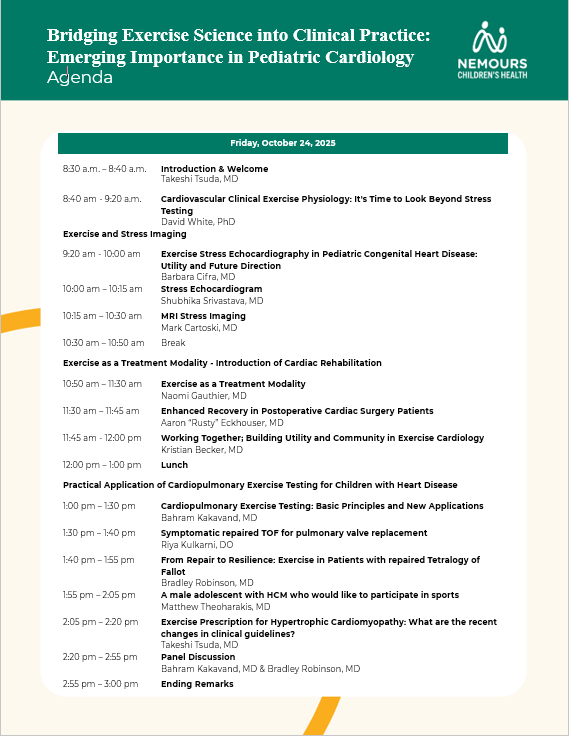
Lecture Title: “Cardiovascular Clinical Exercise Physiology: It's Time to Look Beyond Stress Testing”
Lecture Summary: In clinical environments, exercise physiologists are often only associated with exercise stress testing. Although exercise stress testing is a component within the field of exercise physiology, the scope of the field is much broader. Exercise physiology includes the study of both basic and applied sciences that describes the body’s response to both acute and chronic exposure to physical exertion that leads to physiological adaptation. The exercise physiology field spans from clinical and frail populations and obesity to highly trained professional athletes. This presentation will discuss the great and unseen potential for translating exercise physiology concepts, such as advanced physical activity and exercise intervention approaches from the obesity space, physical function and fitness assessment methodology from the athletic performance space, and the vast application of wearable technology from the physical activity epidemiology space into pediatric clinical exercise medicine.
Takeshi Tsuda, MD
Senior Pediatric Cardiologist, Nemours Cardiac Center, Nemours Children's Health Delaware
Director of Cardiac Rehabilitation and Fitness Program and Cardio-Oncology Program
Professor of Pediatrics, Sidney Kimmel Medical College at Thomas Jefferson University
Lecture Title: Hypertrophic Cardiomyopathy and Exercise Prescription
Lecture Summary: Hypertrophic cardiomyopathy (HCM) is a relatively common genetic heart disease that occurs in approximately 1 in 500 people with diverse clinical phenotype. In pediatrics, HCM is frequently diagnosed in otherwise asymptomatic patients whereas some present with unexpected cardiac arrest or sudden cardiac death (SCD). Previous clinical guidelines mainly restricted them from participating in vigorous exercise out of fear of potential catastrophic events. Consequently, these patients were confined to a sedentary lifestyle resulting in worse prognosis due to higher prevalence of metabolic syndrome and cardiovascular disease. However, most SCD occurred at rest or during daily activities in HCM patients, and unexpected SCD occurs predominantly in undiagnosed cases. With current clinical data, direct causal relationship between exercise and SCD may be over-exaggerated. In 2020, American Heart Association/American College of Cardiology guidelines affirmed the beneficial effects of exercise on general health in patients with HCM rather than unnecessary restrictions. Risk stratification of SCD in adolescents with HCM through cardiopulmonary exercise testing and determination of safe exercise prescription will be discussed.
Bahram Kakavand, MD
Pediatric Cardiologist, Nemours Children’s Hospital, Orlando, Florida
Professor of Pediatrics, University of Central Florida, College of Medicine
Lecture Title: Cardiopulmonary exercise testing: Basic Principles and New applications
Lecture Summary: Cardiopulmonary exercise test (CPET) is a noninvasive procedure used to assess causes of exertional symptoms. It can also be used to evaluate athletes’ exercise capacity. CPET is relatively simple to perform, however, its interpretation can be complex. From just a handful of measured variables, a large number of indices can be calculated, which add to CPET’s complexity. Addition of peripheral devices can expand CPET’s capabilities to refine the diagnosis. This presentation attempts to provide a guide to CPET use and interpretation. It will discuss peripherals to CPET that can assist the provider with tools to better understand exercise physiology and pathophysiology.
Barbara Cifra, MD
Director of the Exercise Medicine Program, SickKids
Director, Lifestyle Medicine Program, Toronto General Hospital
Lecture Title: Exercise Stress Echocardiography in Pediatric Congenital Heart Disease: Utility and Future Direction
Lecture Summary: Exercise stress echocardiography (ESE) has emerged as a valuable tool in the management of pediatric patients with congenital heart disease. Unlike resting studies, ESE provides dynamic insights into ventricular performance, valvular function, and pulmonary pressures during physiologic stress, offering a clearer picture of functional capacity and exercise limitations. ESE is particularly useful for risk stratification, guiding timing of interventions, and monitoring long-term outcomes in children with repaired or palliated defects. Despite its proven utility, challenges remain, including limited standardized protocols and the technical difficulty of imaging in young or uncooperative patients. Future directions include defining test protocols, integrating ESE with cardiopulmonary exercise testing to improve accuracy and reproducibility. These advances may expand the role of ESE in clinical practice, helping tailor personalized care strategies for children with congenital heart disease.
Naomi Gauthier, MD
Medical Director, Exercise Cardiology, Boston Children's Hospital
Assistant Professor of Pediatrics, Harvard Medical School
Lecture Title: Exercise as a Treatment Modality
Lecture Summary: This presentation highlights the critical role of exercise in managing congenital heart disease (CHD). Children and adults with CHD have reduced and declining exercise capacity, which correlates with worse clinical outcomes and overall health and wellness. This is modifiable; regular physical activity improves functional capacity, mood, cognition, and quality of life, while also reducing anxiety and stress. However, many patients with CHD lack access to meaningful exercise opportunities, and many providers are not equipped to deliver individualized exercise prescriptions. To address these gaps, a practical framework is presented that leverages exercise physiology principles for risk stratification and personalized recommendations, with a focus on the utility of cardiopulmonary exercise testing. Evidence demonstrates that, when properly tailored and monitored, exercise is safe—even for those with complex CHD—and leads to sustained improvements in physical function, confidence, and overall potential. Multidisciplinary collaboration with initiatives such as the Global Coalition for Fitness and CHD are essential for advancing precision exercise dosing, tracking outcomes, and fostering positive expectations, and ensuring that all patients with CHD have the opportunity to benefit from the transformative effects of exercise.
Bradley Robinson, MD
Director of the Cardiopulmonary Exercise Lab, Nemours Children’s Hospital, Delaware
Associate Professor of Pediatrics, Sidney Kimmel Medical College at Thomas Jefferson University.
Lecture Title: TOF and Exercise
Lecture Summary: Current indications for pulmonary valve replacement (PVR) in adult patients after surgical repair of Tetralogy of Fallot (TOF) are symptoms (dyspnea, chest pain and exercise intolerance), right ventricular dilation or pressure overload, and sustained ventricular arrhythmias (AHA/ACC management of adults with ACHD, 2018). We review the underlying mechanisms of RV dysfunction in surgically repaired TOF (pulmonary stenosis, pulmonary regurgitation, and arrhythmias) to help understand which patients may improve their exercise capacity after PVR. We also discuss the physiological significance of an exercise parameter, VE/VCO2 (ventilatory efficiency) in interpreting cardiopulmonary exercise testing; how it is obtained, what it means, and how it helps predict the prognosis of these patients.
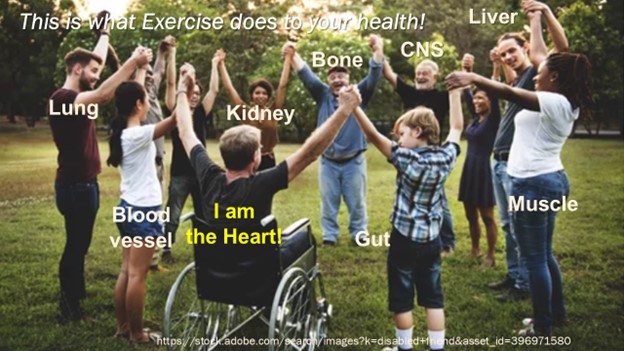
Beneficial Effects of Exercise in Promoting Health Resilience in People with Heart Disease
- Including exercise as part of your regular routine can initiate positive communications with friends, who are there to support you and your health.
- Just as all organs in your body are dependent on heart and circulation, the heart is supported by other organs via multiple different ways.
- Exercising is good for all organs in your body. Your heart supports other organs by providing nutrients and oxygen, and with exercising, these organs also give back and support the heart via biological crosstalk. These beneficial multi-directional conversations can be enhanced by exercising routinely in daily life.
Course summary
- 5.00 MOC ABS – SurgerySuccessful completion of this CME activity, which includes participation in the evaluation component, enables the learner to earn credit toward the CME requirements of the American Board of Surgery’s Continuous Certification program. It is the CME activity provider's responsibility to submit learner completion information to ACCME for the purpose of granting ABS credit.
- 5.00 AMA PRA Category 1 Credit™
In support of improving patient care, Nemours Children’s Health is jointly accredited by the Accreditation Council for Continuing Medical Education (ACCME), the Accreditation Council for Pharmacy Education (ACPE), and the American Nurses Credentialing Center (ANCC), to provide continuing education for the healthcare team.
Nemours Children’s Health designates this activity for a maximum of 5.00 AMA PRA Category 1 Credit™. Physicians should claim only the credit commensurate with the extent of their participation in the activity.
- 5.00 Continuing EducationThis activity is designated for 5.00 continuing education credits.


Parking Information
Please use the parking map for instructions on where to park on campus. Enter the hospital through the Main Entrance and check-in at the Reception Desk.
Travel
Hotel Recommendations
Homewood Suites
350 Rocky Run Parkway
Wilmington, DE 19803
302-479-2000
Marriott Courtyard Brandywine
320 Rocky Run Parkway
Wilmington, DE 19803
302-477-9500
Doubletree Hotel
4727 Concord Pike
Wilmington, DE 19803
302-478-6000
All relevant Financial Relationships have been mitigated.
To view additional information on the Nemours Children's disclosure policy, right click on the following link to open in a new tab.
Click on the Speaker's Name to see their full bio:
Takeshi Tsuda, MD
Takeshi Tsuda, MD
Bahram Kakavand, MD, FACC, FHRS, CEPS-P
Bradley Robinson, MD
Shubhika Srivastava, MD
Takeshi Tsuda, MD
Mark Cartoski, MD
Barbara Cifra, MD, Associate Professor of Paediatrics University of Toronto
Aaron Eckhauser, MD MS
Naomi Gauthier
Bahram Kakavand, MD, FACC, FHRS, CEPS-P
Riya Kulkarni, DO
Bradley Robinson, MD
Shubhika Srivastava, MD
Matthew Theoharakis, MD
Takeshi Tsuda, MD
David White, PhD, FACSM

In support of improving patient care, Nemours Children’s Health is jointly accredited by the Accreditation Council for Continuing Medical Education (ACCME), the Accreditation Council for Pharmacy Education (ACPE), and the American Nurses Credentialing Center (ANCC), to provide continuing education for the healthcare team.
Physicians
Nemours Children’s Health designates this live activity for a maximum of 5.00 AMA PRA Category1 Credit(s)TM. Physicians should claim only the credit commensurate with the extent of their participation in the activity.
American Board of Surgery Continuous Certification (ABS)
Successful completion of this CME activity enables the learner to earn up to 5.0 credits toward the CME requirement(s) of the American Board of Surgery’s Continuous Certification program. It is the CME activity provider's responsibility to submit learner completion information to ACCME for the purpose of granting ABS credit.
Other Professions
A certificate of participation will be provided to other health care professionals requesting credits. Please check with your accreditation board to make sure they accept AMA PRA Category 1 Credit™.
Below are the credit types available to you per your professional designation.
Available Credit
- 5.00 MOC ABS – SurgerySuccessful completion of this CME activity, which includes participation in the evaluation component, enables the learner to earn credit toward the CME requirements of the American Board of Surgery’s Continuous Certification program. It is the CME activity provider's responsibility to submit learner completion information to ACCME for the purpose of granting ABS credit.
- 5.00 AMA PRA Category 1 Credit™
In support of improving patient care, Nemours Children’s Health is jointly accredited by the Accreditation Council for Continuing Medical Education (ACCME), the Accreditation Council for Pharmacy Education (ACPE), and the American Nurses Credentialing Center (ANCC), to provide continuing education for the healthcare team.
Nemours Children’s Health designates this activity for a maximum of 5.00 AMA PRA Category 1 Credit™. Physicians should claim only the credit commensurate with the extent of their participation in the activity.
- 5.00 Continuing EducationThis activity is designated for 5.00 continuing education credits.
Price
| Registration Rates | |
| Student, Resident, Fellow & Non-Physicians | $50 |
| All Other Attendees | $150 |
Cancellation Policy
Please notify Allie Goetaski by September 26, 2025. Refunds will not be processed after this date. Nemours Children's is not responsible for any cancellation or change fees assessed by hotels, airlines or travel agencies.
For more information, contact Allie Goetaski at [email protected].
Are you logged in using Nemours Associate SSO? To ensure credits are awarded correctly, you must update your account profile.
- Right click on My Account to open it in a new tab.
- Click on Edit, then on the Profile tab.
- Verify your profession & credentials
- Enter applicable license type & number, Hospital Affiliation and Specialty.
Are you a healthcare professional licensed in Florida? To ensure accurate reporting to CE Broker, please follow these additional instructions.
- The first, middle and last name on your account must match the name on your license.
- The CE Broker profession on your account must match the profession on your license.
- Your Florida license number must include your license prefix with no spaces and no leading zeroes.
- INCORRECT: ME_123456, ME00123456, or 123456
- CORRECT: ME123456
Required Hardware/software
Please download the Microsoft Teams app before the day of the conference.
Best viewing if using Google Chrome on a computer.